Fewer manual handoffs
Information moves with the work instead of being copied between spreadsheets, chats and different teams.

We do not start with software features. We start with the work that is getting missed, repeated, delayed or difficult to manage — then design the right system around it.
These examples show how Webinfine thinks about transformation across different business types. Select a scenario to see the operating problem, the system we would build and the result it is designed to create.
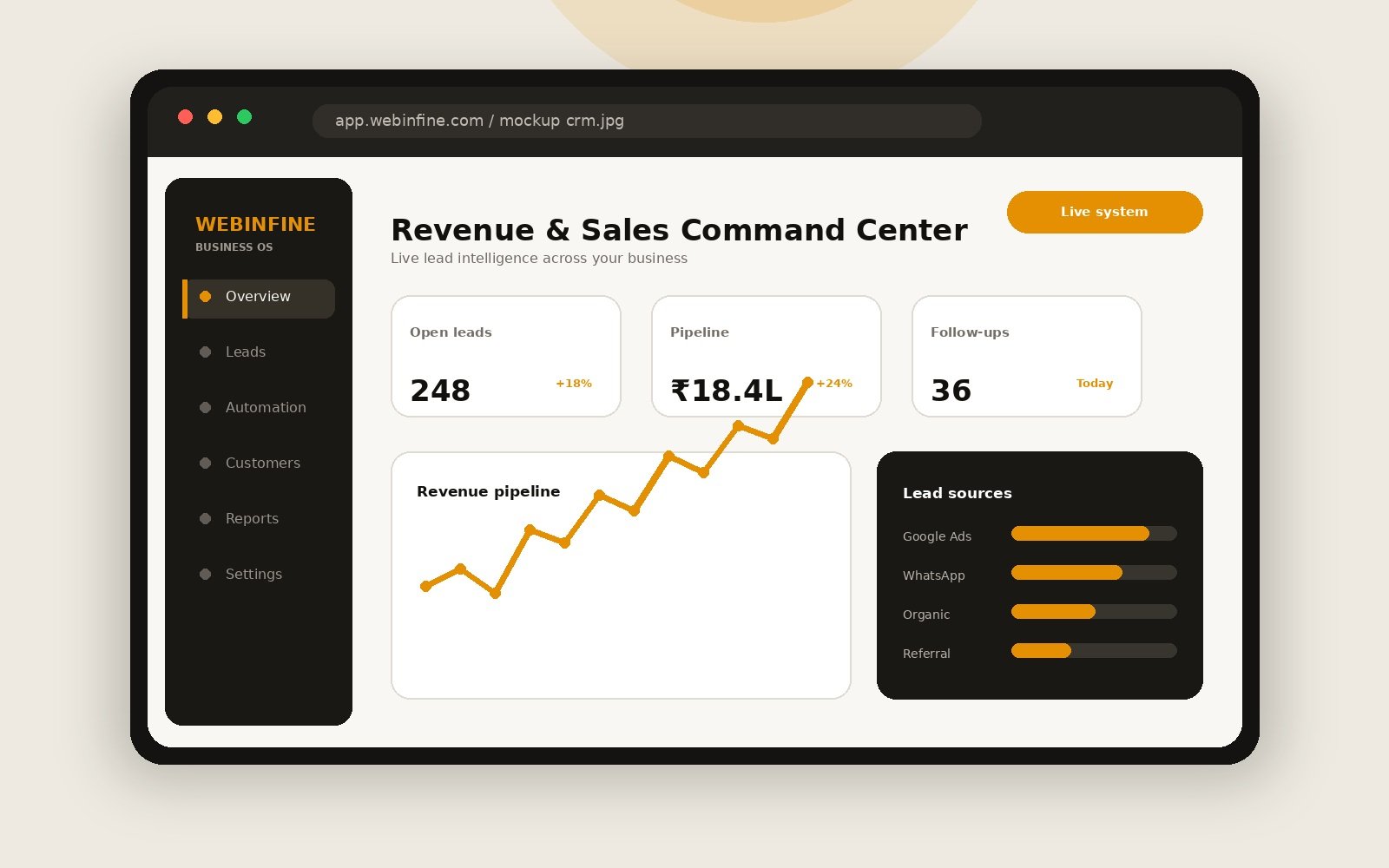
Campaign enquiries, WhatsApp conversations, follow-ups and unit availability are brought into one clear sales workflow.
Leads arrive from multiple channels and managers cannot easily see who followed up, what happened or what should happen next.
Central CRM with duplicate detection, automatic assignment, WhatsApp follow-up, inventory context and manager dashboards.
Every enquiry has ownership, history and a next action — with better visibility for the sales team and management.
Good software should reduce friction in the business. The interface matters, but the real value is what becomes easier after the system is in place.
Information moves with the work instead of being copied between spreadsheets, chats and different teams.
The right person receives the right task sooner, while routine reminders and follow-ups can happen automatically.
Owners and managers can see what needs attention without repeatedly asking the team for updates.
A case study is not only about what was built. It is about understanding why the system exists and how it changes everyday work.
We map where work is repeated, delayed, forgotten or difficult to see.
We define the people, data, approvals and actions that should connect.
CRM, HRM, ERP, web, apps, WhatsApp, AI and automation are combined where useful.
The system is refined around real usage, visibility and future growth.